
Marion Projected Versus Actual Release
A projected release date is an administrative calculation for a sentenced person. TDCJ may revise it as sentence facts, credits, statutory eligibility, Board action, warrants, or other legal events change. Actual release is the documented event when custody ends or a prisoner moves to supervision. A date that has passed without a matching release record is not proof that the person left.
Marion County Jail creates a different problem. A person awaiting trial may have a bond amount yet no sentence-based date. Even after bond is posted, release can await processing and clearance of other holds. A county-sentence calculation comes from the judgment, jail-time credit, and Marion jail record, not from the statewide TDCJ page unless the person later enters state custody.
Find a Marion Release Date
Start by deciding whether the case is pretrial county custody, a county sentence, or a TDCJ prison sentence. That choice prevents a missing state result from being misread as missing data.
- Check the Marion County roster to learn whether the person is presently shown in county custody.
- Obtain the court judgment, sentence, jail-time credit, and any later order for a county sentence.
- For state custody, open the statewide TDCJ search and use the TDCJ number when known.
- Otherwise search by name, then match age or birth date, SID, county of conviction, offense, and sentence.
- Copy each label exactly: Parole Eligibility Date, Projected Release Date, and Maximum Sentence Date.
- Review parole status and recheck near the displayed date.
- Confirm actual release with Marion County Jail, TDCJ, or the Parole Division as the custody path requires.
The complete Marion County release search helps trace transfers when a person leaves the county roster without entering the community.
TDCJ Marion Release Date Fields
The official TDCJ Online Inmate Search is statewide. A Marion County conviction does not imply that the person is housed in Marion County, and no TDCJ prison unit was identified inside the county. Search by the seven-digit TDCJ number when possible because a name can return more than one person.
| TDCJ field | How to read it |
|---|---|
| Projected Release Date | The current administrative release calculation, subject to change. |
| Parole Eligibility Date | The point at which review may become legally possible, not a grant. |
| Maximum Sentence Date | The calculated sentence endpoint, subject to other sentences and legal changes. |
| County of conviction | Helps confirm that the result matches the Marion case. |
| Current facility | Shows the state unit then reporting custody. |
| TDCJ number and SID | Strong identifiers for matching the correct person. |
The official search form is visible in the TDCJ query source shown below.
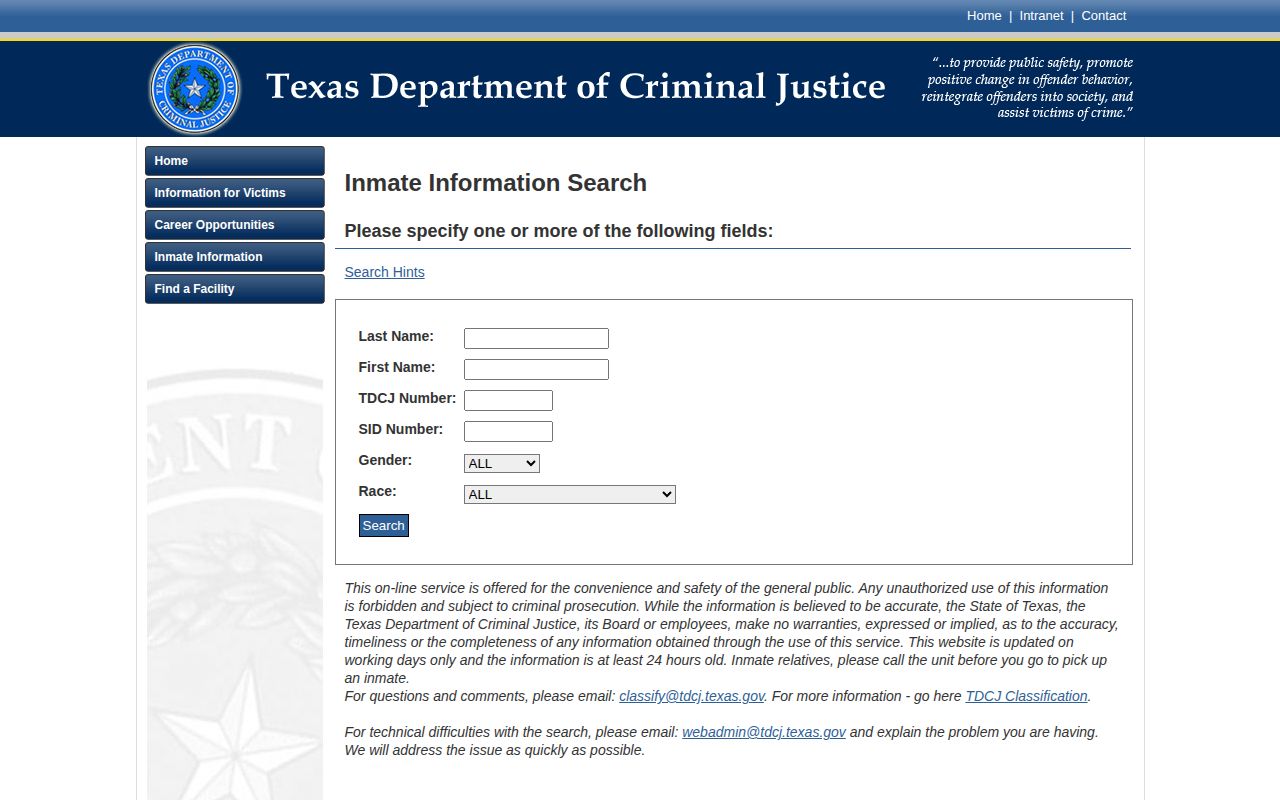
The form establishes the statewide route; the resulting detail must still be matched to the Marion County sentence and identifiers.
Texas Release Date Definitions
TDCJ defines projected dates differently for older and newer offenses eligible for mandatory supervision. For an eligible offense committed before September 1, 1996, the projected field reflects the point when calendar time plus accrued good time equals the sentence, unless parole occurs sooner. For an eligible offense on or after that date, release is also subject to the Board of Pardons and Paroles’ discretionary mandatory-supervision review.
If the Board denies discretionary mandatory supervision, TDCJ may recalculate the projected date toward maximum expiration or discharge. A moving date can therefore reflect a legal decision rather than a web error. Eligibility merely opens a possible review path. A person may remain confined after that date following denial.
The official TDCJ definitions page provides the date terminology captured below.
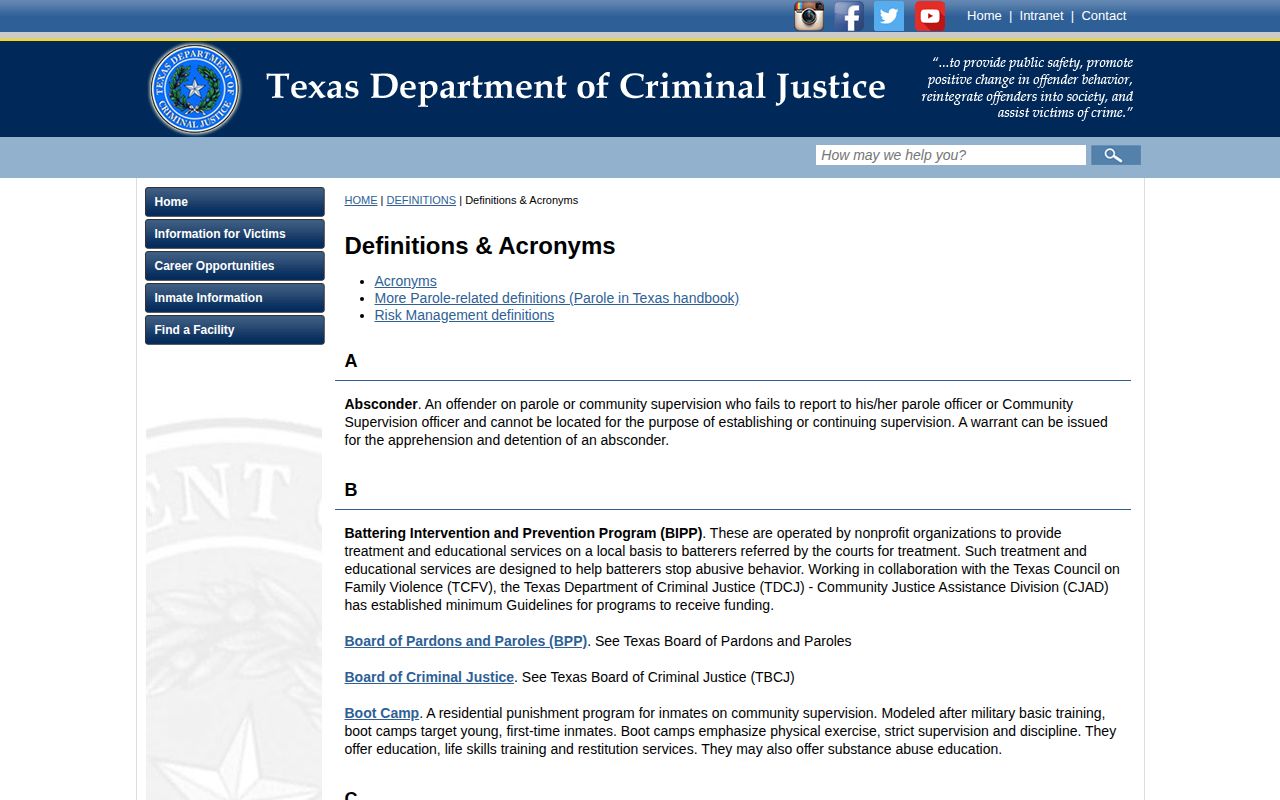
Use the label displayed by TDCJ and preserve the date on which it was retrieved because dynamic status can change.
No Texas 85% Shortcut
Texas law does not support a blanket claim that every Marion County prisoner must serve 85 percent of a sentence. That number is often repeated from a federal good-time shorthand. Texas calculations depend on the offense, offense date, sentence structure, statutory category, credit record, and Board action.
Government Code Section 498.003 describes TDCJ good-conduct classifications and credits. Good time is a privilege, not a vested right, and does not reduce the sentence itself. Credits affect eligibility as the law permits and may be forfeited. Government Code Chapter 508, including Section 508.145, supplies offense-specific and date-specific parole rules.
Specified serious offenses can require calendar time, without good-conduct time, equal to one-half of the sentence or 30 years, whichever is less, subject to statutory minimums and exclusions. Other convictions follow different rules. Mandatory supervision also has exclusions and discretionary review. A sound Marion date lookup therefore records the offense and dates instead of applying a single percentage.
Marion County Sentence Calculations
A county jail sentence is not calculated through the TDCJ projected-date field. Obtain the Marion judgment, the credited time stated in or applied under the court record, and the jail’s computation. Texas Code of Criminal Procedure provisions, including Article 42.032, govern county jail credit and discharge mechanics.
No published Marion County good-time policy was found that supports a generic “two-for-one” subtraction. Do not estimate a county release by halving the stated term. Ask the sentencing court and Marion County Jail to calculate the date from the actual judgment and record. The same caution applies when a date lands on a weekend or holiday: no Marion-specific published weekend-release policy was located, so call rather than assume Friday departure.
- Pretrial detainee
- A person held before case disposition, often without a sentence-based projected date.
- Jail-time credit
- Time credited toward a sentence under the judgment and applicable law.
- Good-conduct time
- A TDCJ credit classification affecting eligibility as law permits, not the sentence length itself.
- Detainer
- A request or hold that may prevent community release or cause transfer.
What Changes Marion Release Dates
A projected date is a snapshot of the calculation at retrieval. The source should be checked again after a material event and close to the anticipated release.
| Change | Possible effect | Best confirmation |
|---|---|---|
| Disciplinary credit loss or restoration | Can move the state calculation later or earlier. | TDCJ record and time-credit information |
| New or additional sentence | Can alter the controlling sentence endpoint. | Court judgment and TDCJ calculation |
| Detainer, warrant, or hold | Can block community departure or cause transfer. | Custodian and receiving agency |
| Parole approval or denial | Can create processing steps or move the projected date. | BPP result and Parole Division |
| Court order | May change sentence credit, bond, or custody authority. | Court record plus custodian |
| Calculation correction | Can revise any displayed estimate. | TDCJ Classification and Records |
A favorable parole vote does not mean immediate departure. TDCJ says that once Classification and Records receives a release certificate, the audit and time-calculation process generally takes 14 to 21 business days. The date may still change, including on the scheduled day.
Read Three Marion Date Labels
Suppose a TDCJ detail lists parole eligibility in March, a projected date in September, and a maximum sentence date the next year. March opens a review possibility. It is not a scheduled gate release. September may reflect a mandatory-supervision calculation, but an eligible newer offense remains subject to discretionary Board action. The later date marks the calculated endpoint.
A denial, lost credit, added sentence, warrant, or corrected credit can move the projected field toward that endpoint. Record all three labels. Publishing only the earliest date creates the false impression that eligibility equals release.
By contrast, a Marion roster entry showing bond but no TDCJ match may be entirely normal. A pretrial case has no state sentence calculation. Bond can authorize release after conditions are met, yet processing and other holds still control physical departure. Match the court order to the jail release record.
Confirm Marion Scheduled Releases
TDCJ’s scheduled-release guidance says an online detail may display a scheduled release date and location after favorable action. It also warns that these details can change without notice. The official guidance captured below supports a final check rather than reliance on a saved estimate.
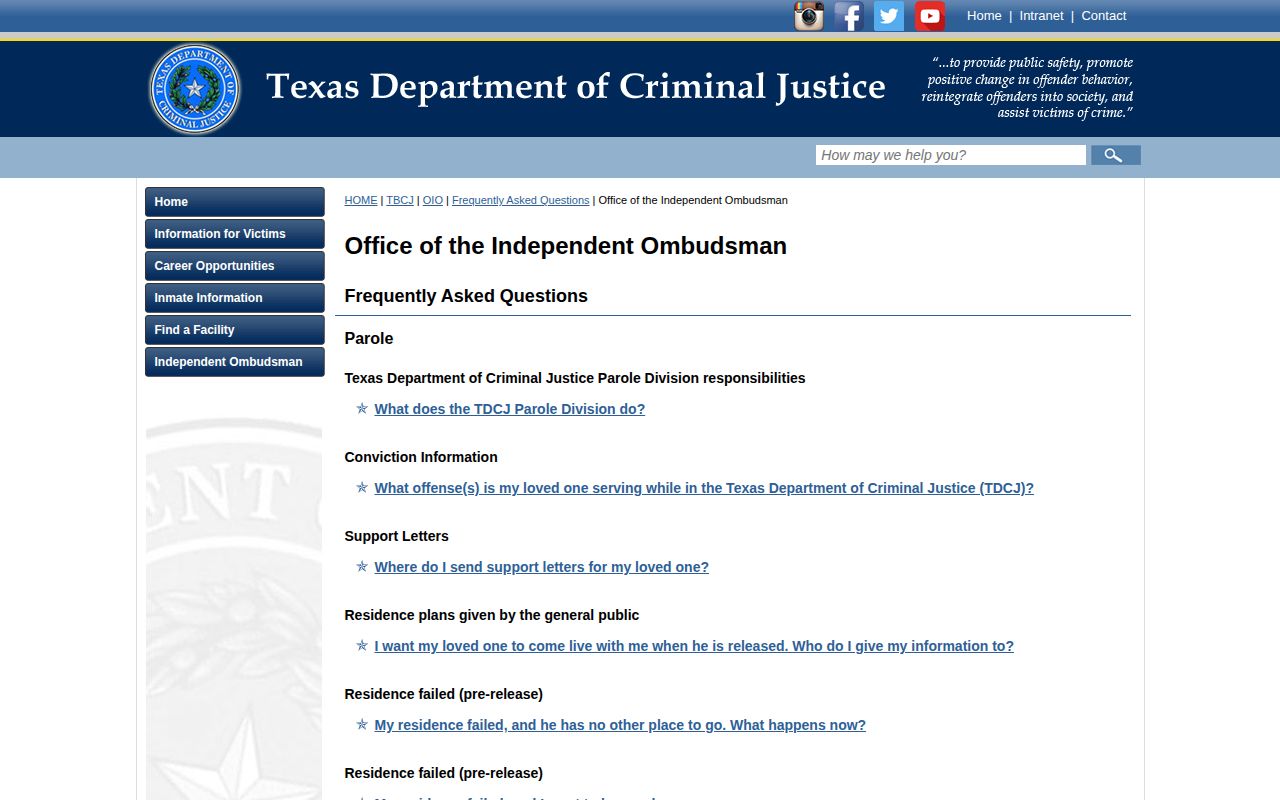
The screen reinforces that release processing remains separate from a Board vote and that the live record should be reviewed near the event.
For parole in absentia from a county jail, TDCJ Classification and Records does not calculate or post the release date online. The Huntsville Parole Review Unit is the proper state route. For other state cases, Parole Division can address processing at 512-406-5202. TDCJ offender-information locator numbers are 936-295-6371 and 800-535-0283 on weekdays from 8 a.m. to 5 p.m.
Marion Release Date Fallbacks
TDCJ provides email and telephone paths when the public result is absent or unclear. The email route asks for the full name and seven-digit TDCJ number. Without that number, supply the exact date of birth or approximate age and county of conviction. Public offender information may include the number, location or status, offense, incarceration history, and projected release date.
For county custody, substitute the Marion clerk judgment and jail record. If IVSS reports “transferred,” obtain the receiving-agency field before choosing the next locator. Transfer to TDCJ, another county, USMS, or ICE means Marion’s physical custody ended while government custody may continue.
Release alerts can help track a change but remain distinct from the official record. The Marion County VINE Inmate Check explains the current Texas IVSS notification route. Preserve the notice, then confirm the actual date with the jail, TDCJ, or Parole Division.
Public Record Search
Sponsored Results